

Appearance
lt-web
needs verificationPurpose
lt-web is the public Latest Thinking website. It presents researcher and publication content from the content management system (CMS). It owns presentation, not mobile recording or LT Work lifecycle decisions.
What it does
Visitors browse research videos, researcher pages, institutions, fields, Sustainable Development Goals, playlists, news and editorial pages. Content adapters create pages from Strapi records. Researcher pages gather related publications and profile videos.
The website includes browser search, chaptered playback, captions, sharing and embed pages for third-party iframes. A shorts feed uses the player's feed module.
Visitors can send a contact form or an account-deletion request. The latter requests email confirmation; submitting the form does not itself delete an account.
Look around the public website
Start at lt.org. Open a research video, read its summary, then look below it for the researcher, institution and original paper. These sections connect the explanation you watch to the research behind it.
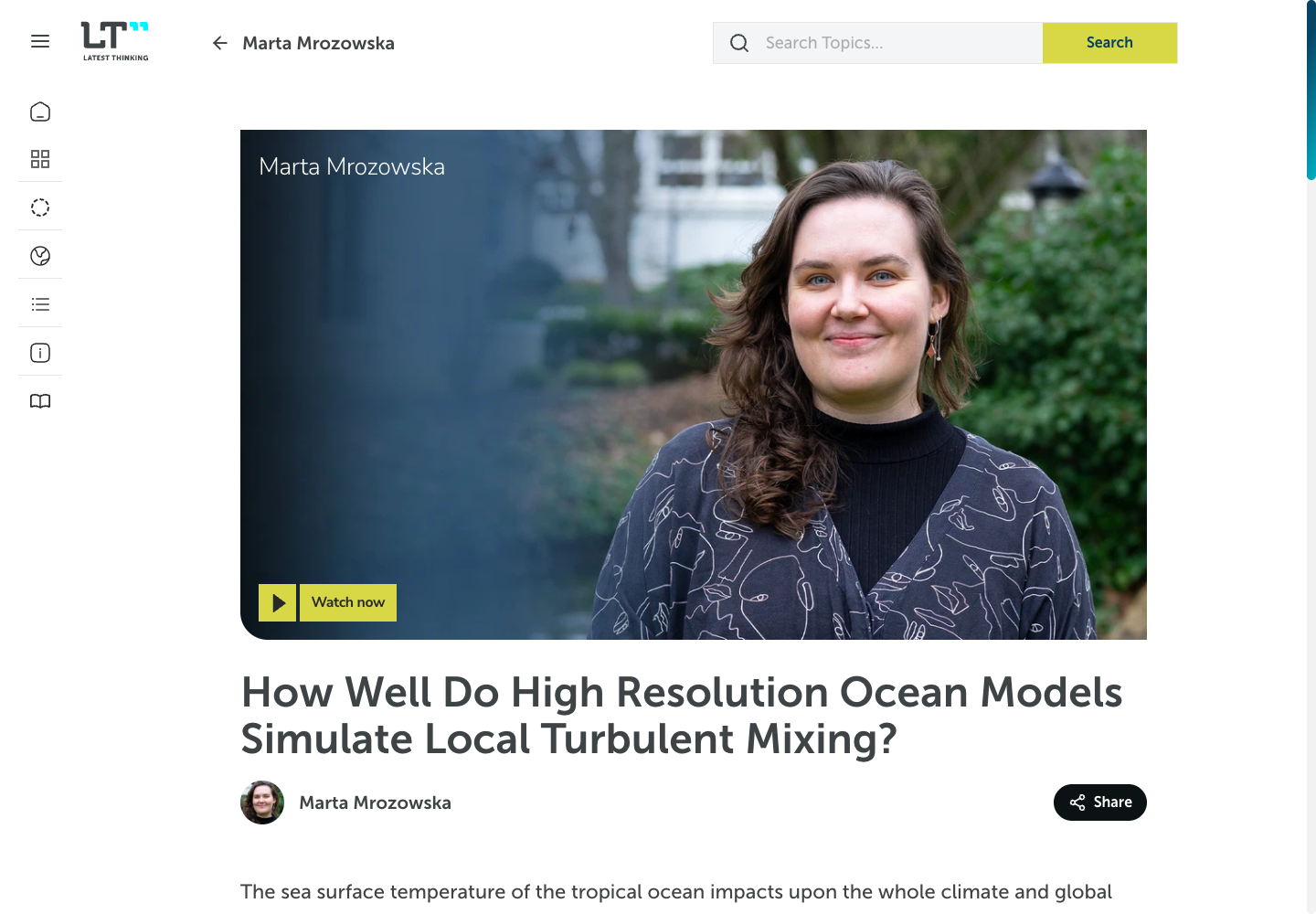
Open this Publication Plus by Marta Mrozowska, captured 10 September 2026. The page also has an original-publication section and a citation below the visible area.
For the differences between the two research-video products, read Publication and Publication Plus.
For maintainers: technology
Hugo 0.165 generates static pages. Tailwind Cascading Style Sheets (CSS) 4 styles them. Cloudflare Pages hosts builds. JavaScript uses Meilisearch and the @latest-thinking/lt-player package. Hugo version, dependencies and build scripts
How it connects
Hugo fetches Strapi content at build time using the read-only build identity. The browser then reads static pages, searches Meilisearch and fetches media. Build credentials stay in the build environment.
The current player integration reads configuration embedded in the page and mounts the player. A direct browser request to lt-core's video-configuration endpoint is not established by this implementation.
Who can do what
Every persona uses the public website as an anonymous visitor. Yes means the public action is available; No means there is no dedicated authoring or administration surface here.
| Action | Anonymous | Researcher | Coordinator | Administrator | Editor |
|---|---|---|---|---|---|
| Browse, search and watch | Yes | Yes | Yes | Yes | Yes |
| Share or use an embed page | Yes | Yes | Yes | Yes | Yes |
| Send a public form | Yes | Yes | Yes | Yes | Yes |
| Edit research content on this website | No | No | No | No | No |
| Administer accounts on this website | No | No | No | No | No |
Authoring belongs in lt-app or lt-strapi; account administration belongs in lt-core.
Environments and links
Localhttp://lt.localhost
Staging hostname targethttps://stg.lt.orgCanonical staging choice needs confirmation.
Staging build configurationhttps://staging.lt-web.pages.dev
Productionhttps://lt.org
Where to read more
Explore lt.org, meet the player and compare the video formats.
Known gaps
Confirm the canonical staging hostname and the future core-to-website configuration connection. Search currently configures Publication Plus, researchers and institutions; do not assume all website content is indexed. Automatic rebuild triggering after new core content reaches Strapi also needs confirmation. See open questions.
For maintainers: source references
These references require repository access. Everything needed to understand this page is explained above.
- Repository boundaries
- Adapters
- researcher page
- Search service
- embed generation
- feed service
- contact form
- account-deletion request
- Hugo version
- dependencies and build scripts
- Authenticated build requests
- Player mounting
- Website scope
- local example configuration
- DNS
- staging URL
- production URL
- AGENTS.md
- presentation skill
- README
- LT Player specification